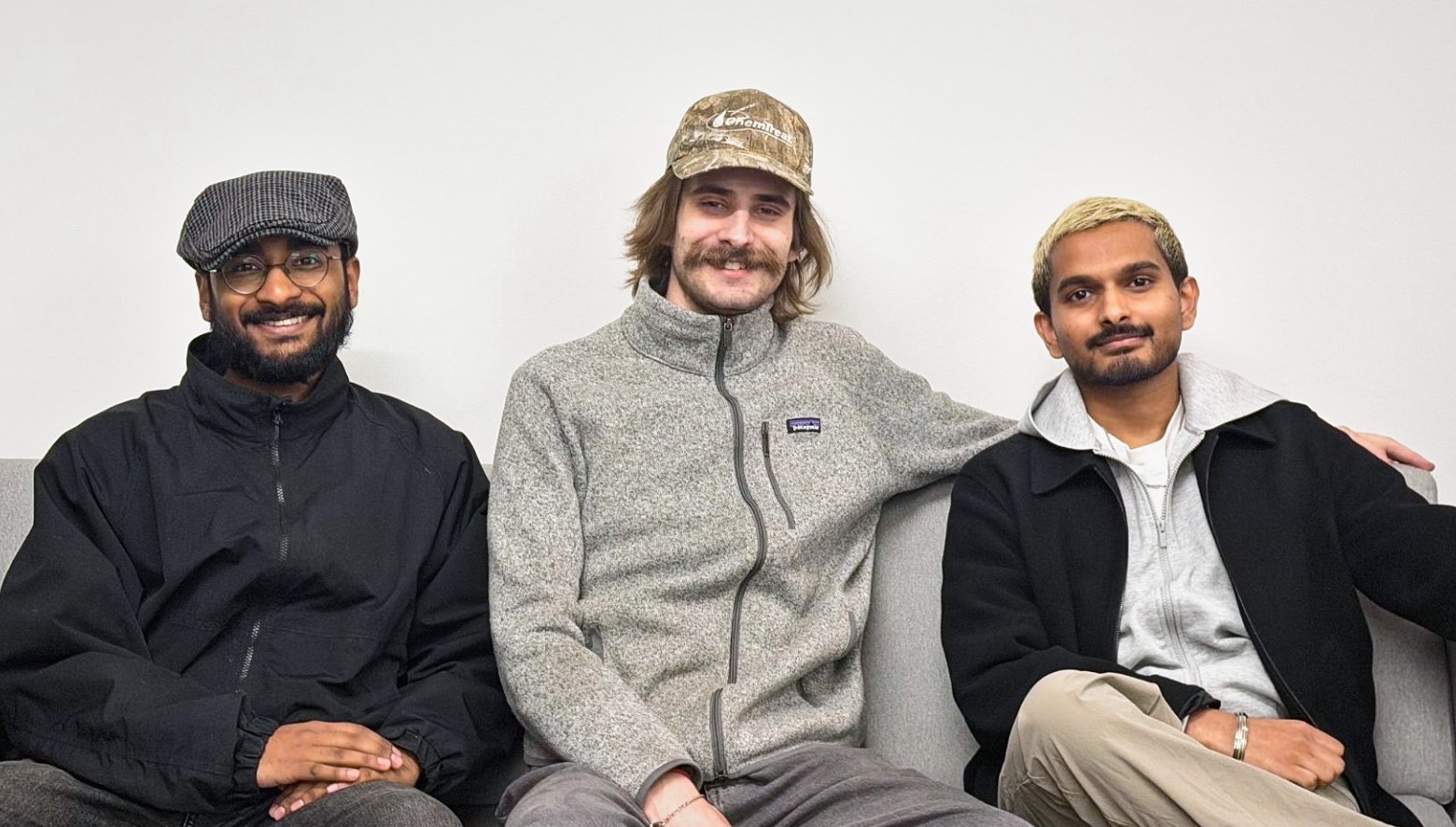


Hi, we are Rohan, Kaushik and Thomas, the founders of Fringe.
Overview
Independent storytellers are using the same AI models that studios use to build films, but they are missing the workflows that turn those model capabilities into a complete production. Fringe is that pipeline, run by an agent, so a writer with a script can focus on directing instead of prompting.
Ask: Intros to investors who’ve backed creative software or independent studios and understand how new tools spread among creatives. Reach us at rohan@fringe.film, or DM @einrojo on X or @JosephRohan on Telegram.
The problem
Animating a finished minute by hand costs $2,000 to $25,000. AI models collapse that cost, but producing an animated film needs the prompting, the model choice, the continuity, and the files held together. Independent storytellers struggle to assemble those parts of AI production:
Every model has its own prompt style, length limits and content rules, and the best one changes shot to shot. Storytellers end up working as prompt engineers.
Production is now a loop of takes and fixes, but the tools are built for one-off clips. Characters, places and style drift, and every fix means explaining the whole shot again.
Takes, references and versions scatter across model sites, folders and an editor built for filmed footage. Cutting a story means downloading, renaming and starting over.
Our solution
Fringe is a production studio for making films with AI at a fraction of the cost. An agent runs the loop of generating, reviewing, revising and editing, and you direct every step.
The agent writes the prompts and picks the right model for each shot, from more than a dozen leading image and video models. Open any prompt, model or setting and take over.
Each shot keeps its inputs together: characters, places, keyframes, sketches, 3D blocking and motion references. Give a note and the agent revises from there, so the cast stays consistent across a series.
Takes, references and the cut live in one project. Ask the agent to trim, reorder or swap takes, or edit by hand, then export.
Plan every shot
Drop in your script and pick a look. Fringe breaks it into a storyboard of clips, each with the cast, places and props it needs.
Direct in plain words
Open any clip and write a note, the way you’d brief an animator. Fringe rewrites the shot and makes the next take for you to review.

Keep your world consistent
Start your next short from a one-line pitch. Fringe carries over your cast, places, style and rules, all kept in one Project Bible.
Vision
Entertainment is entering the creator IP era. The Amazing Digital Circus began as an indie YouTube pilot, passed a billion views, signed a non-exclusive deal with Netflix, and opened to $36.6M worldwide in cinemas this June. Micro-dramas, a format built on fast, cheap production, earned about $11B in 2025, more than the box office in China. Animation is next: RisingJoy will release 20 AI-made anime series by the end of Q1 2027. Audiences have stopped caring where a story comes from, with 61% of young animation fans liking independent YouTube series as much as studio work, or more. The last barrier is the cost of building new worlds, and it’s collapsing. Fringe is the studio for this era: one storyteller with a script builds the characters, the world and every episode of an original franchise, and owns all of it.
Team
Rohan (CEO), Thomas (CTO), and Kaushik (COO) have been building AI video products for over two years. Before Fringe, they built Slop Club, a social video generation site that grew to over 200,000 users, 1.5 million generations, and $200,000 in revenue. Rohan and Kaushik are college dropouts who left to work at Polkadot and Messari respectively. Thomas studied CS at the University of Toronto, and was previously an AI researcher and penetration tester.