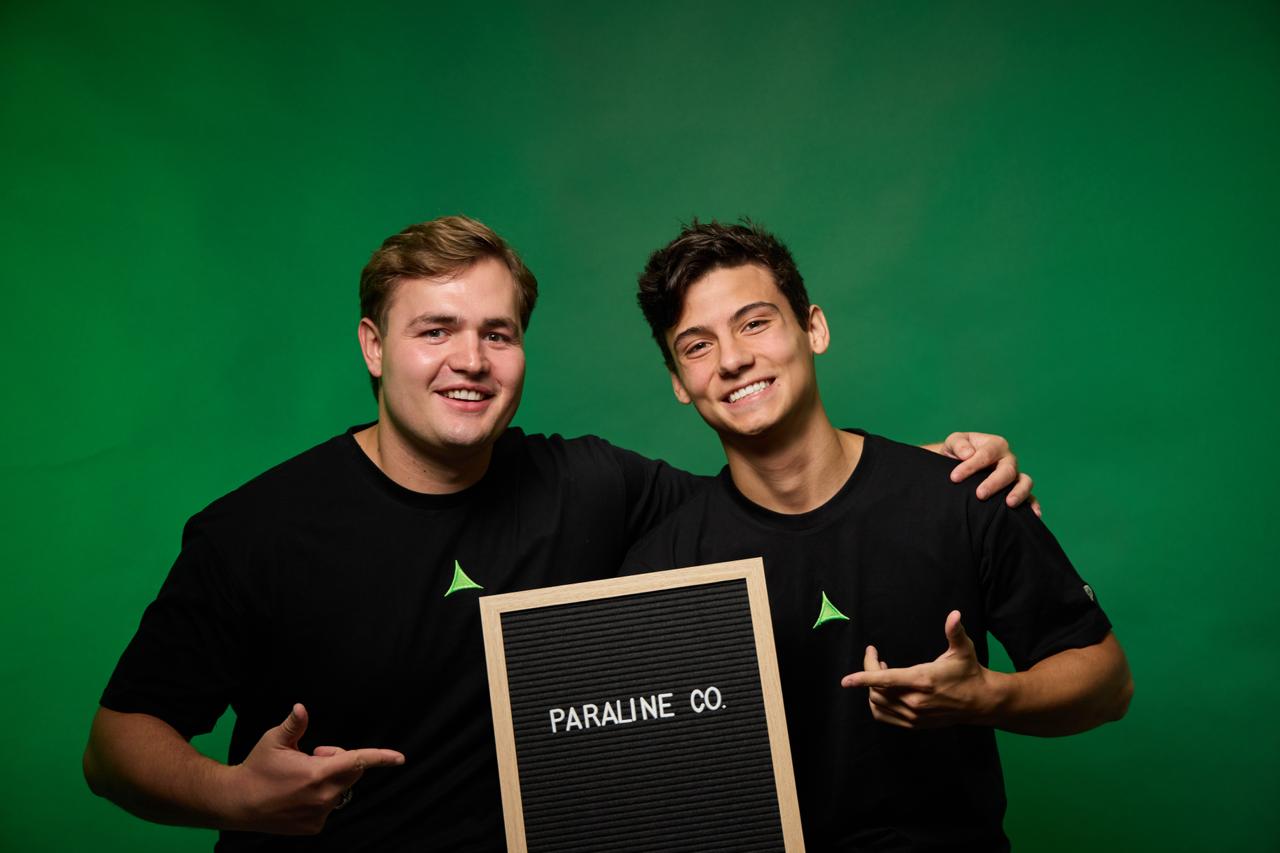


Hi, we are Noah and Chris, the co-founders of ParaLine.
Overview
Keeping railroad track in shape is an endless job: deciding what to fix, then getting crews, heavy machines and track time to the right spot. So railroads let problems pile up and fix them in big, costly pushes. ParaLine builds small, modular robots that find and fix small defects before they become big ones.
Ask: Raising a pre-seed. We're looking for investors who have backed hardware companies selling into industrial markets. Reach us at contact@paralineco.com.
The problem
Railroads spend an estimated $139B a year maintaining the world's 700,000+ miles of track. Every wheel presses 18 tons onto a patch of steel the size of a dime, so rail is always wearing and cracking, and defects left untreated cause derailments. Keeping up is an endless job:
Day-to-day repair is always behind. Crews are short and inspection is mostly done by hand, so small defects grow and rail gets replaced early.
Specialized work, like rail grinding, runs on big contractor machines. Mobilizing the equipment alone can be 40% of a job's cost, so scattered weak spots rarely get fixed.
Every job is a fight for track time. Operators say taking track out of service can cost several hundred thousand dollars in minutes.
Our solution
ParaLine builds small, modular robots with software that directs them, so track maintenance runs continuously in the background instead of in big, disruptive pushes.
Robots can be stationed next to the track or brought in by truck, so a railroad can fix a few spots in a short track window, without a contractor mobilization or a long closure.
One platform takes swappable modules, starting with rail grinding and inspection, so railroads don't need a separate machine for every task.
Better batteries, electric actuators and machine learning now let small machines do work that used to take large hydraulic ones.
Vision
Warehouses and factories have already moved from big machines run by crews to fleets of small robots that work all the time. Track maintenance hasn't. It still happens in big, planned pushes, with heavy machines and contractors brought in from far away. With ParaLine, robots stationed along the network inspect and fix track as defects appear, and maintenance runs in the background instead of shutting down the line. Railroads stop choosing between giving up track time and letting rail wear out, and small robots take over a growing share of the $139bn railroads spend on track maintenance each year.
Team
Noah Fisher (CEO): Contributed to Russ Tedrake's widely used Robot Manipulation textbook and took first place in MIT's 2.678 robotics competition. He double majored in EECS and Mechanical Engineering at MIT, researched navigation and control for autonomous robots, and played five years of varsity football.
Christopher de la Rosa (CTO): Founded a design company that builds and sells educational electronic tools to MIT labs, after filing a patent in high school and coaching an FTC robotics team to the World Championship playoffs. He graduated from MIT in 2024 in Mechanical Engineering, focused on design for manufacturing, with a minor in Computer Science. He's built three walking hexapod robots